Part 8
Part 8 · 2 min read ·
One year after the divorce, the Alder Street clinic helped a retired nurse named Celia stop an unauthorized loan against her home. Her nephew had not forged her identity; he had persuaded her to sign a stack of papers she did not understand. The distinction mattered legally, but the fear in her face was familiar.
Paige sat beside her and explained every page without rushing. Diana contacted the lender. I made tea in Aunt June’s old kitchen while Celia called her bank from the clinic’s verified phone line. By the end of the afternoon, the loan was suspended pending review.
When Celia left, she touched the framed key by the door. “Was this yours?”
“It still is,” I said.
The answer surprised me with its simplicity.
Alder Street was mine not because the deed said so, though the corrected deed mattered. It was mine because I had finally decided what responsibility came with keeping it. Grant had treated property as a container of money and people as signatures he could move between pages. The clinic taught the opposite lesson every day: a signature belonged to a person, and consent required more than the appearance of agreement.
Grant sent one letter that year. He did not ask me to change testimony or revisit the settlement. He wrote that he had spent months describing the scheme as desperation because desperation sounded less deliberate than entitlement. He admitted he had believed he could repair the loss before I discovered it, then ask forgiveness for the method after presenting a successful result.
I read the letter once and gave it to Diana for the file. I did not reply. His understanding was his work, not my assignment.
Morgan later testified in a professional-licensing case involving Malcolm. Paige testified too. Their cooperation did not remove their earlier choices, but it prevented the record from becoming another story Grant controlled. Meridian adopted the new safeguards statewide.
At the clinic’s anniversary dinner, Paige raised a glass of sparkling water. “To missing receipts,” she said.
Everyone laughed because the missing key receipt was the tiny administrative error that brought her to court. If it had been signed, she might never have looked for me. If she had treated the discrepancy as someone else’s problem, the false sale might have survived long enough to become far more expensive to undo.
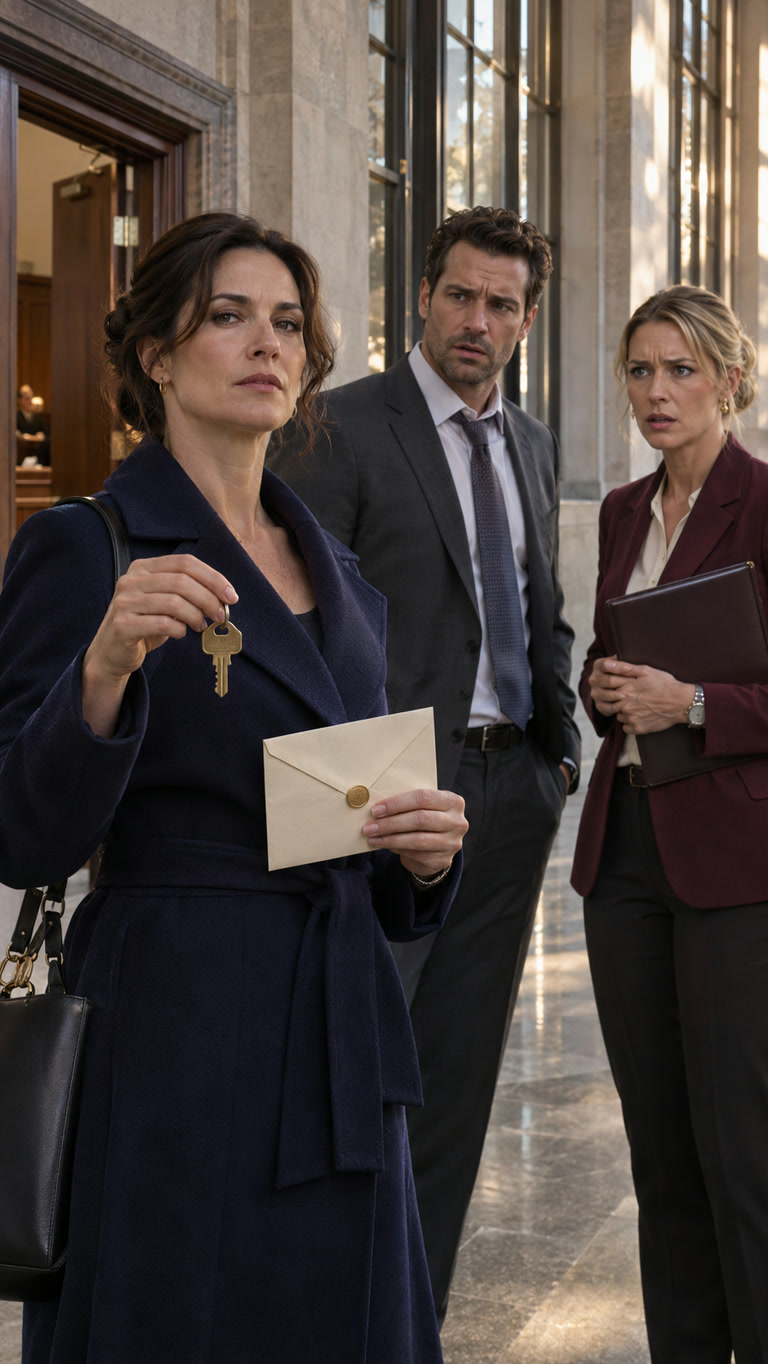
I placed the original evidence envelope in a locked archive drawer. The brass key remained on the wall, but I carried a new one on my ring.
Before closing for the evening, I walked through every room. The upstairs furniture had been uncovered. The office lights glowed against the brick. Downstairs, a folder waited for the next morning’s appointment, each page marked with a plain-language explanation.
I locked the front door and tested it once.
The house had not saved me. Paige had not saved me. Even the court had only restored what evidence could prove.
What changed my life was the moment three women stopped accepting the separate stories one man had written for them and compared the pages.
That was how the sale ended.
That was how the marriage ended.
And that was how Alder Street finally began.
You’re caught up. The next part hasn’t been published yet, so check back soon.